
Dementia Support at Home: Routines, Communication Tips, and Safety
Supporting someone with dementia at home? These practical tips can help create reassuring routines, improve communication and make the home easier to navigate.
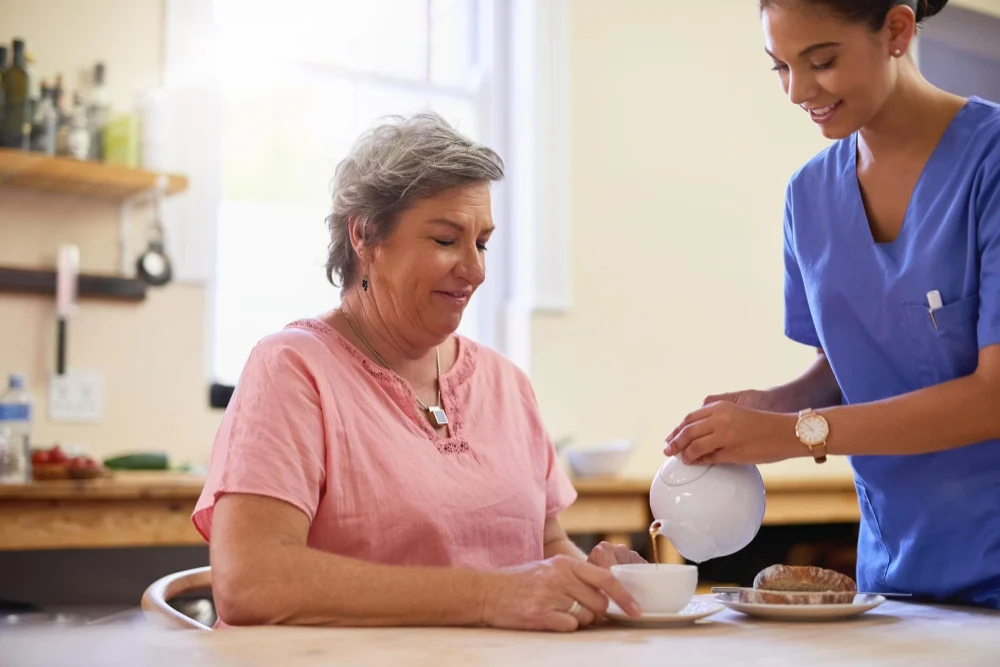
Dementia can affect memory, communication, judgement and daily tasks, but it does not mean a person loses their independence or can no longer live at home. The right support can protect dignity, choice and connection to familiar people and places.
Use Routine to Create Reassurance
A familiar rhythm can reduce confusion and distress. Routine should provide helpful structure, not turn every day into a rigid timetable.
Start with regular points in the day, such as waking, meals, medication, personal care and bedtime. Keep commonly used items in the same place and continue familiar tasks for as long as the person can take part. Folding towels or setting the table can support confidence and purpose.
Everyday tasks are often easier when they are broken into one step at a time. Allow extra time rather than rushing or taking over, and use simple prompts, labels, photos or a written schedule where these are helpful. Offering two outfits rather than a full wardrobe can also make a decision feel more manageable.
When several family members or support workers are involved, record useful routines, preferences and calming strategies so everyone can respond consistently.
Needs change over time, so review what is and is not working.
Communicate With the Person, Not Around Them
Dementia may make it harder to find words, follow an explanation or respond quickly. It does not remove the person’s need to be included and treated as an adult.
Before speaking, reduce distractions and get the person’s attention. Speak calmly, use short sentences and share one idea at a time. Ask a simple question, then allow time for a response. Repeating it more loudly or rapidly usually adds pressure.
It may also help to:
- speak directly to the person rather than only to others
- ask yes-or-no questions or offer two clear options
- use names, gestures, facial expressions or visual cues to support your words
- check that glasses and hearing aids are available and working
- avoid memory tests, arguments and repeated correction
- acknowledge the feeling behind the words, even when the details are not accurate.
If the person says they need to go home when already there, arguing about the address may increase distress. “You’re wanting somewhere familiar. Tell me what you miss about home,” recognises the feeling and may reveal what they need.

Look for the Need Behind Changed Behaviour
Restlessness, repeated questions, irritability, withdrawal or wanting to leave may communicate that something is wrong. These actions are not necessarily deliberate, so it helps to look beyond the behaviour itself.
Before responding, pause and consider what happened immediately beforehand. Could the person be in pain, hungry, thirsty, tired, constipated, needing the toilet, or feeling too hot or cold? Noise, loneliness, an unfamiliar face, a change in routine, or missing glasses or hearing aids may also be contributing.
Keeping a brief record of what happened, when it occurred and what helped can reveal patterns and give a health professional useful information. During distress, reduce the noise, speak reassuringly and try a familiar activity rather than arguing or punishing the person.
A sudden or marked change in confusion or behaviour over hours or days should not simply be put down to dementia. It may be delirium caused by illness, infection, dehydration, pain, constipation or a medicine change. Delirium is a medical emergency. Call Triple Zero (000) or go to an emergency department if you are concerned.
Make the Home Easier to Understand and Use
Home safety is about reducing avoidable hazards while helping the person keep doing what they can—not removing every risk or restricting them unnecessarily.
Practical changes may include:
- clearing walkways, securing loose flooring and removing trip hazards
- improving lighting and using night lights, particularly between the bedroom and bathroom
- keeping furniture and frequently used items in consistent locations
- using clear signs, pictures or colour contrast to identify rooms and important objects
- considering grab rails, non-slip flooring and a shower chair after appropriate assessment
- storing medicines, cleaning products, tools and other hazardous items securely when accidental use is a risk
- checking smoke alarms and considering appliance shut-off devices, hot-water controls or flood alarms
- using a personal alarm, door or motion sensor, or identification bracelet if there is a risk of the person leaving home and becoming lost.
Avoid many major changes at once, as an unfamiliar-looking home can create more confusion. An occupational therapist can recommend changes suited to the person’s abilities and goals. Technology or monitoring should respect privacy, consent and the least-restrictive options.

Plan Support Before a Crisis
It is better to arrange extra support before the main carer is exhausted or the current arrangement begins to break down. Needing help is not a personal failure; it is a sign that the person’s support needs may have changed.
Ask for help early. Depending on assessed needs and eligibility, a support plan may include respite, personal care, meals, domestic assistance, transport, nursing, allied health or home modifications. My Aged Care (1800 200 422) can arrange an assessment for older Australians. A person under 65 with younger onset dementia may be eligible for the NDIS if they meet its access requirements.
Keep an emergency care plan with current medicines, health information, contacts, routines and what helps when the person becomes distressed. Carer Gateway (1800 422 737) can help with planned respite and, where available, emergency respite. For dementia-specific advice at any time, call the National Dementia Helpline on 1800 100 500.
The Bottom Line
Effective dementia support at home is rarely one major solution. It is built from consistent routines, respectful communication, an easier-to-navigate home and people who notice when needs change.
JNJ Community Support Services provides practical, person-centred assistance built around each person’s routines, abilities and goals. Contact our team to discuss support at home or in the community.
References
- Healthdirect – How to Care for Someone With Dementia at Home
- Dementia Australia – Talking to Someone With Dementia
- Dementia Australia – Creating a Dementia-Friendly Home
- Healthdirect – Delirium
- My Aged Care – Support at Home Program
- Dementia Australia – National Disability Insurance Scheme (NDIS) Support
- Carer Gateway – Planned and Emergency Respite
- Dementia Australia – National Dementia Helpline
Disclaimer
This article provides general information only. It is not a substitute for medical or occupational therapy advice, or personalised care planning. Speak with the person’s GP or relevant health professional about changes in their condition, behaviour, safety or support needs. In an emergency, call Triple Zero (000).